Ethical Fashion Brands to Know in 2026 — Why Artisan-Made is the Future

The conversation around ethical fashion has shifted. It is no longer enough for a brand to claim sustainability through recycled packaging or carbon offsets. Increasingly, conscious shoppers in Europe and beyond are asking a more fundamental question: who made this, and were they paid fairly for it?
The answer to that question points directly to artisan-made fashion — and to the workshops of Jaipur, India, where some of the world’s most extraordinary textile craft is still practised by hand.
What Makes a Fashion Brand Truly Ethical?
Ethical fashion is not a certification or a label. It is a set of choices made at every stage of the supply chain. A truly ethical fashion brand:
- Pays artisans fairly — not the minimum the market will bear, but a wage that reflects the skill and time required to make something well.
- Works with small producers — family workshops and artisan communities, not factories optimised for volume at the expense of quality and worker welfare.
- Makes things to last — quality construction, quality materials, and designs that transcend seasonal trends.
- Is transparent about its supply chain — willing to tell you where things are made, by whom, and under what conditions.
- Produces in limited quantities — because overproduction is one of fashion’s greatest ethical failures.
Why Artisan-Made Fashion is the Most Ethical Choice
When you buy a mass-produced garment — even one from a brand that claims ethical credentials — you are buying something made in a system designed to minimise cost. The artisan at the end of that system is almost always the one who absorbs the pressure.
Artisan-made fashion works differently. The artisan is not a cost to be minimised — they are the product. Their skill, their time, their knowledge is what you are paying for. When that relationship is direct and honest, it is one of the most ethical transactions in fashion.
Jaipur — The Artisan Capital of India
Jaipur, the Pink City of Rajasthan, is one of the great craft cities of the world. Its artisan communities — block printers, embroiderers, weavers, dyers, jewellers — have been practising their crafts for centuries. The city’s craft economy supports hundreds of thousands of people, many of them women working from home or in small family workshops.
When global fashion brands source from Jaipur through intermediaries, driving prices down at every stage, these communities suffer. When brands like Zoshak work directly with artisans, paying fairly and building long-term relationships, the craft economy thrives.
How to Build an Ethical Wardrobe in 2026
- Buy less, buy better. One exceptional piece is worth ten mediocre ones.
- Ask where it was made. If a brand cannot tell you, that is your answer.
- Choose craft over trend. Artisan-made pieces do not go out of style because they were never in style in the conventional sense — they exist outside the trend cycle entirely.
- Invest in pieces with provenance. A jacket with a story — made by a specific person, in a specific place, using a specific technique — is worth infinitely more than a jacket with a label.
- Wear things more. The most sustainable garment is the one you already own and wear constantly.
Zoshak — Artisan Fashion from Jaipur to Europe
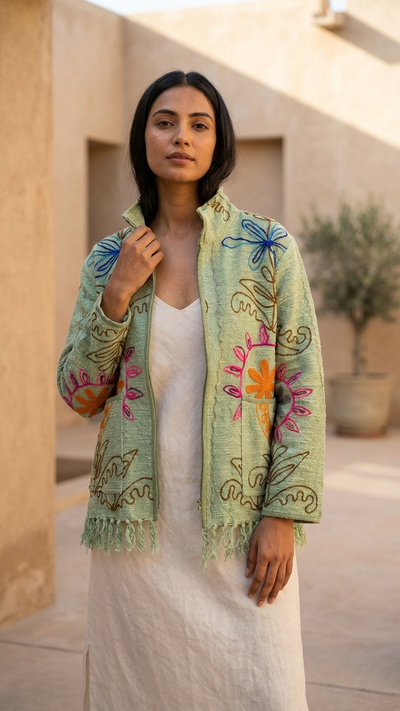
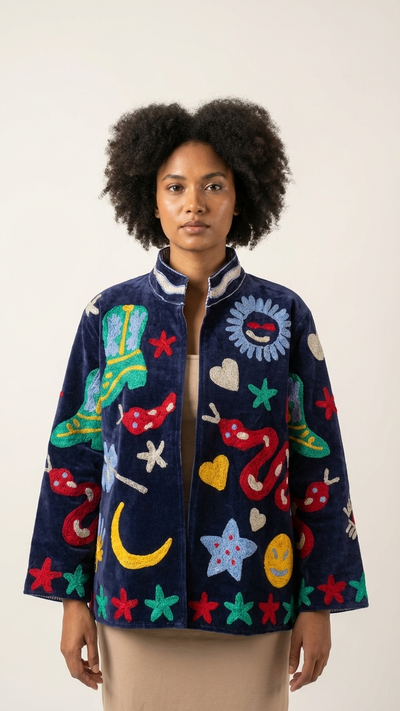
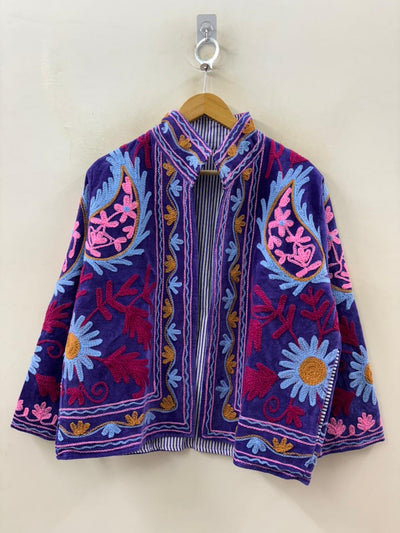
At Zoshak, every piece is made by hand by artisans in Jaipur — Suzani embroiderers, block printers, tailors — who are paid fairly for their skill and time. We make in small batches, we are transparent about our process, and we ship worldwide to customers in the UK, Europe, the US, and beyond who share our belief that fashion can be beautiful, ethical, and meaningful all at once.