Slow Fashion vs Fast Fashion — Why Handmade Matters

The fashion industry produces 100 billion garments a year. Most of them will be worn fewer than five times before being discarded. Behind each one is a supply chain built on speed, volume, and the suppression of cost — which almost always means the suppression of the people who make the clothes.
Slow fashion is the opposite of all of that. And at Zoshak, it is the only way we know how to work.
What Slow Fashion Actually Means
Slow fashion is not just a marketing term. It is a philosophy of making — one that prioritises quality over quantity, craft over convenience, and the wellbeing of makers over the demands of trend cycles.
In practice, slow fashion means:
- Making things in small batches, not mass production runs
- Using traditional techniques that take time and skill
- Paying artisans fairly for their work
- Creating pieces designed to last years, not seasons
- Being honest about where things come from and how they are made
It also means accepting that slow fashion costs more than fast fashion — because the true cost of making something well, by hand, with care, is higher than the cost of making something quickly, by machine, at scale.
The True Cost of Fast Fashion on Artisan Communities
When fast fashion brands source from India, they typically work through layers of intermediaries, driving prices down at every stage until the artisan at the end of the chain — the embroiderer, the block printer, the weaver — is left with almost nothing.
The result is that traditional craft communities are hollowing out. Young people leave for cities because they cannot earn a living wage from their parents’ craft. Skills that took generations to develop are lost within a single generation. The knowledge of how to carve a block, how to mix a natural dye, how to work a chain stitch — these things disappear when there is no economic reason to preserve them.
How Jaipur’s Craft Economy Works
Jaipur has been a city of artisans for centuries. Its craft economy is built around clusters of specialists — block printers in Sanganer and Bagru, embroiderers in the old city, dyers, weavers, tailors — each community with its own deep knowledge and its own traditions.
When you buy a Zoshak jacket, you are buying into this economy directly. The artisans who make our pieces are paid fairly for their time and skill. The workshops are small — family-run, in many cases — and the relationships are long-term. We are not a platform that sources from the lowest bidder. We are a brand built on specific people, specific skills, and specific places.
Why Limited Edition Matters
Every Zoshak piece is limited edition. We make small batches — sometimes just a handful of each colourway — and when they are gone, they are gone. We do not restock. We do not manufacture to demand.
This is not a marketing strategy. It is a consequence of how we work. Our artisans move from design to design, season to season, bringing their full attention to each new piece. The limitation is built into the process.
It also means that when you own a Zoshak jacket, you own something genuinely rare. Not rare in the artificial sense of manufactured scarcity — but rare in the true sense: made once, by hand, by a specific person, in a specific place, at a specific moment in time.
How to Build a Wardrobe of Pieces That Last
The slow fashion approach to a wardrobe is simple: buy less, buy better, wear more. A few well-made pieces that you love and reach for constantly will serve you better — and cost less over time — than a wardrobe full of things you wear once.
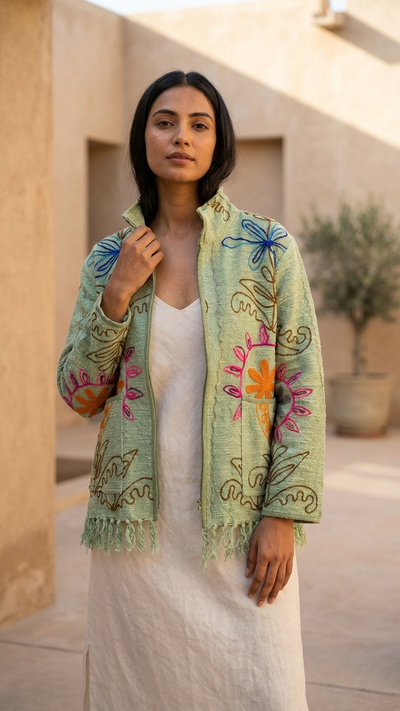
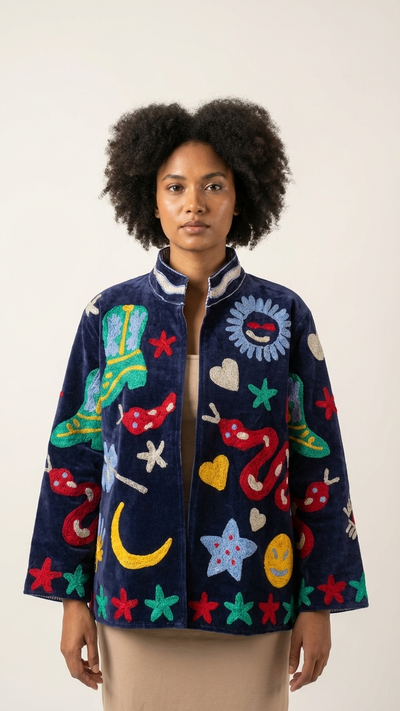
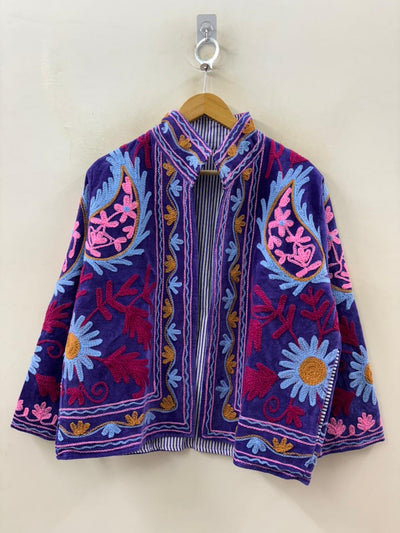
When you invest in a hand-embroidered velvet jacket, you are investing in something that will not go out of style because it was never in style in the conventional sense. It is craft. It is art. It is a piece of living cultural heritage that you get to wear.
That is what slow fashion means to us. And that is why handmade matters.