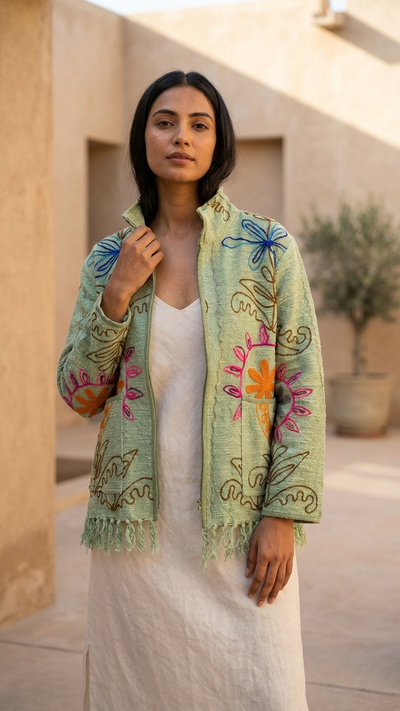
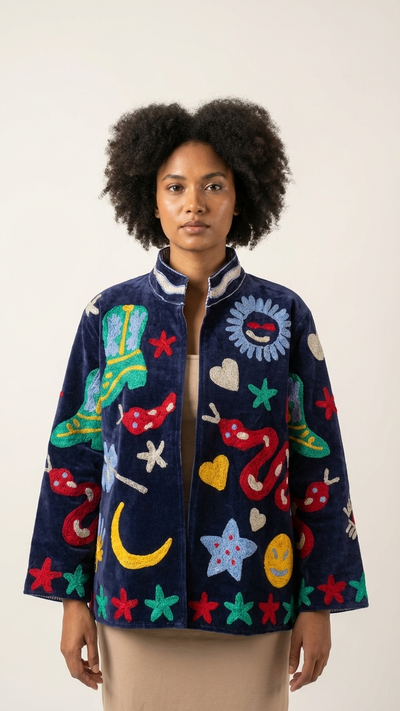
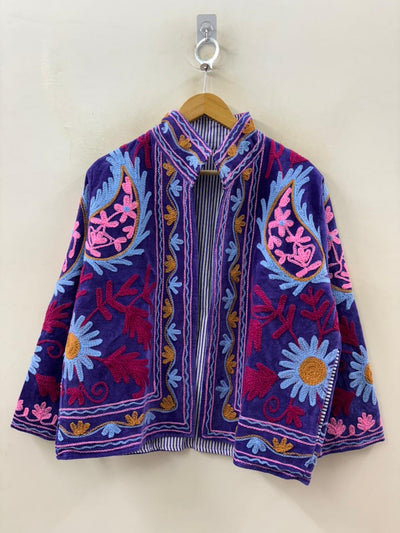
The Ancient Art of Block Printing: How Your Zoshak Jacket is Made

Introduction
Have you ever wondered what "hand-block printed" actually means?
In an age where everything is mass-produced by machines in minutes, there's a 500-year-old craft tradition still thriving in the narrow lanes of Jaipur's old city. It's called block printing — and it's one of the most labor-intensive, beautiful, and endangered textile arts in the world.
At Zoshak, every jacket that leaves our workshop carries the legacy of this ancient technique. Today, we're taking you behind the scenes to show you exactly how your jacket is made — from wooden block to wearable art.
Grab your chai. This is going to be a journey. ☕
What is Block Printing? (And Why Should You Care?)
Block printing is exactly what it sounds like: printing fabric using hand-carved wooden blocks dipped in dye.
But here's what makes it special:
It's SLOW. A single jacket can require 50+ block impressions. Each one placed by hand. Each one aligned perfectly. One at a time.
It's SKILLED. Master block printers train for 8-10 years before they can work independently. The precision required is extraordinary.
It's ENDANGERED. With the rise of digital printing and mass production, fewer young people are learning this craft. Entire families of block printers have lost their livelihoods.
When you buy a block-printed jacket from Zoshak, you're not just buying clothing. You're voting with your wallet to keep this 500-year tradition alive.
The History: From Mughal Courts to Modern Wardrobes
Block printing in India dates back to the 12th century, though some historians argue it's even older.
The Mughal Era (1500s-1700s)
During the Mughal empire, block printing flourished in Rajasthan. Artisans created intricate patterns for royal garments, palace textiles, and ceremonial fabrics. The famous "Sanganeri" and "Bagru" styles of block printing emerged during this time — named after villages near Jaipur.
The Mughal emperors were obsessed with textiles. They employed hundreds of block printers, dyers, and weavers. Some patterns were so complex they required 8-12 different wooden blocks for a single design.
Colonial Era Disruption (1800s)
When the British colonized India, they systematically destroyed local textile industries to favor British mill-made cloth. Hand block printing, once a thriving profession, nearly disappeared.
Many artisan families abandoned the craft. Knowledge that had been passed down for generations was lost forever.
Modern Revival (2000s-Present)
In the past two decades, there's been a revival of interest in traditional Indian textiles — driven by:
- The slow fashion movement
- Conscious consumers seeking ethical alternatives
- Designers like Anita Dongre and Ritu Kumar championing traditional crafts
- Brands like Zoshak connecting artisans directly to global markets
Today, approximately 5,000-8,000 families in Rajasthan still practice block printing. But the craft remains vulnerable.
The Process: How Your Zoshak Jacket is Block Printed
Let's walk through the exact process we use at Zoshak. This is how your jacket goes from raw fabric to finished art.
STEP 1: Design Creation
First, our design team collaborates with artisans to sketch new patterns. We draw inspiration from:
- Traditional Rajasthani motifs (peacocks, flowers, geometric patterns)
- Contemporary aesthetics (minimalist interpretations of ancient symbols)
- Customer feedback (what you tell us you want to wear!)
The design is sketched on paper, refined, and then — here's where it gets interesting — transferred to wood.
TIME: 2-3 days for design development
STEP 2: Block Carving
This is where master block makers enter the picture.
Block carving is a separate craft entirely. In Jaipur, there are specialized artisans who do ONLY block carving. They've been doing it for 20-30 years.
The Wood:
- Teak wood is preferred (durable, fine grain)
- Sheesham wood is also used
- Wood is seasoned for 2-3 years before carving
The Process:
- Design is traced onto the flat wood surface
- Using traditional chisels and hammers, the carver removes negative space
- Only the pattern that will touch the fabric remains raised
- The block is sanded smooth
- A handle is attached to the back
The Time: One block takes 8-12 hours of continuous work.
The Cost: A single carved block costs ₹800-2,000 ($10-25) depending on complexity.
For a complex design, we might need 4-6 different blocks. Each block prints a different color or layer of the pattern.
These blocks become family heirlooms. The same blocks are used for decades, passed from father to son.
STEP 3: Fabric Preparation
Before printing can begin, fabric must be prepared:
Washing: Raw cotton is washed to remove any sizing or impurities Treating: Fabric is soaked in a solution that helps dye penetrate evenly Drying: Sun-dried on Jaipur rooftops (yes, really!) Smoothing: Stretched taut on printing tables
The fabric we use at Zoshak:
- 100% cotton (breathable, takes dye beautifully)
- Cotton velvet (for our Nazar collection)
- Waffle cotton (for Suzani collection)
All sourced from ethical suppliers in India.
TIME: 1-2 days
STEP 4: Natural Dye Preparation
This is where Zoshak takes a traditional approach.
Many modern block printers use chemical dyes (cheaper, faster, brighter). We use natural dyes wherever possible:
Indigo (blue) — from the indigo plant Madder (red) — from madder root Turmeric (yellow) — from turmeric powder Pomegranate (black) — from pomegranate rind Marigold (orange) — from marigold flowers
These natural dyes:
- Are gentler on skin (no harsh chemicals)
- Biodegradable (better for environment)
- Create softer, more complex colors
- Age beautifully (like good wine!)
The dye master prepares large vats of dye, adjusting ratios to achieve the exact shade we need.
TIME: 4-6 hours for dye preparation
STEP 5: The Block Printing Magic
Now comes the moment you've been waiting for: actual block printing.
Picture this:
Morning, 9 AM: Ramesh arrives at his workshop in Jaipur's Sanganer neighborhood. He's 38 years old and has been block printing since he was 10.
Setup:
- Long wooden printing table (8-10 feet)
- Fabric stretched taut and pinned
- Wooden blocks lined up in order
- Dye trays prepared
The Technique:
- Ramesh dips the wooden block face-down into the dye tray
- Taps it gently to remove excess dye
- Positions the block carefully on fabric
- Presses down firmly, using his body weight
- Taps the back of the block with a wooden mallet (for even impression)
- Lifts the block carefully (no smudging!)
- Moves to next position
- Repeats
For a single jacket that needs 50 impressions, this process takes 2-3 hours of continuous printing.
The Challenges:
- Alignment must be PERFECT (even 1mm off ruins the pattern)
- Pressure must be consistent (or color will be uneven)
- Hand must be steady (trembling = blurred print)
- Speed must be balanced with precision
This is why master printers are paid well. It's not "just stamping." It's an art form that requires a decade of practice.
STEP 6: Drying & Setting
After printing:
Sun Drying: Fabric is laid flat in the sun for 4-6 hours Steaming: To set the dye permanently (so it doesn't wash out) Final Wash: To remove excess dye Second Drying: Another sun-dry cycle
This back-and-forth ensures your jacket's colors stay vibrant for years, not months.
TIME: 1-2 days
STEP 7: Cutting & Assembly
Once the printed fabric is ready:
- Pattern pieces are cut (jacket front, back, sleeves)
- Cotton batting is layered between fabric (for quilting)
- Hand-quilted using traditional kantha stitch
- Pieces assembled and hand-stitched
- Buttons sewn on
- Final quality check
TIME: 2-3 days
STEP 8: Your Jacket is Ready!
From start to finish: 7-10 days of work by multiple artisans.
The result? A jacket that:
- Took human hands over 40 hours to create
- Uses techniques passed down through 20+ generations
- Contains natural dyes from plants and minerals
- Is completely unique (no two exactly alike)
- Supports artisan families in Jaipur
That's what you're wearing when you put on a Zoshak jacket. Not just fabric and thread — history, heritage, and human connection.
Why Block Printing Matters (Beyond Beautiful Clothes)
Environmental Impact
Chemical Printing vs. Block Printing:
| Aspect | Digital/Screen Print | Block Printing |
|---|---|---|
| Water usage | 100-150L per jacket | 20-30L per jacket |
| Chemical runoff | High (toxic dyes) | Low (natural dyes) |
| Energy consumption | High (machines) | Minimal (human power) |
| Biodegradability | No (synthetic) | Yes (natural) |
| Waste | Fabric scraps + chemicals | Minimal scraps |
Block printing is inherently sustainable. It uses less water, zero electricity (except for steaming), and natural materials.
Cultural Preservation
Every time you choose block-printed over machine-made, you're helping preserve:
- 500-year-old techniques
- Artisan family livelihoods
- Traditional knowledge
- India's textile heritage
UNESCO has recognized block printing as an Intangible Cultural Heritage that needs protection.
Economic Justice
In mass fashion:
- Garment workers earn $2-3/day
- Work 12+ hour shifts
- No creative input
- Replaceable, anonymous labor
In traditional block printing (Zoshak model):
- Artisans earn 3x local market rate
- Work at their own pace
- Creative partners in design
- Celebrated by name, not anonymous
Which world do you want to support?
How to Care for Block-Printed Fabrics
Your block-printed Zoshak jacket will last decades if you care for it properly:
DO: ✓ Dry clean for best results ✓ Hand wash in cold water (if needed) ✓ Use mild, pH-neutral soap ✓ Air dry in shade (direct sun can fade over time) ✓ Iron on reverse side ✓ Store in breathable cotton bag
DON'T: ✗ Machine wash (agitation damages fabric) ✗ Use harsh detergents (strips natural dyes) ✗ Wring or twist (distorts shape) ✗ Bleach (destroys dyes) ✗ Dry clean too frequently (once a season is enough)
Natural dyes develop a beautiful patina over time. Your jacket will actually get MORE beautiful as it ages — like a good leather bag or denim jacket.
The Future of Block Printing
Here's the hard truth: Block printing is endangered.
In 1990, there were an estimated 15,000 block printing families in Rajasthan.
Today? About 5,000-8,000.
Why?
- Low Pay: Traditional buyers (local markets) pay very little
- Hard Work: Young people choose easier, higher-paying jobs
- Competition: Cheap digital printing is faster
- Lack of Recognition: Artisans remain anonymous
But here's the hope:
Brands like Zoshak are creating a new model:
- Connecting artisans directly to global customers
- Paying fair wages (3x traditional rates)
- Celebrating artisans by name
- Educating consumers about the craft
When you buy from Zoshak, you're not just getting a jacket. You're casting a vote for a different kind of fashion industry.
Meet the Block Printers Behind Your Jacket
Ramesh Kumar, Master Block Printer
Age: 38 | Experience: 28 years
"I learned from my grandfather. He learned from his grandfather. This technique is over 200 years old in our family. When I block print, I feel connected to all the generations before me. Your jacket? It carries that history."
[Photo: Ramesh at his printing table]
Suresh Singh, Block Carver
Age: 52 | Experience: 35 years
"Carving blocks is meditation. One block takes me 8-12 hours. When I carve, the world disappears. Just me, the wood, and the design. These blocks will be used for 20-30 years. That's my legacy."
[Photo: Suresh carving a wooden block]
How You Can Support Block Printing Artisans
Beyond buying a Zoshak jacket (though that helps enormously!), here's how you can support this craft:
- Learn about it (you're doing that now! Share this article!)
- Visit Jaipur (tours of block printing workshops available)
- Choose handmade over machine-made when possible
- Ask brands "Who made this?" (demand transparency)
- Share artisan stories on social media (tag us @zoshakofficial)
- Gift handmade (introduce others to artisan crafts)
- Value quality over quantity (one great jacket > ten mediocre ones)
Conclusion: More Than Just a Jacket
The next time you put on your Zoshak jacket, remember:
- The wooden block carved over 12 hours
- The master printer pressing each impression perfectly
- The natural dyes prepared from plants
- The hands that quilted the layers together
- The family in Jaipur whose livelihood depends on their craft
- The 500-year tradition you're keeping alive
You're not wearing "a jacket."
You're wearing history.
You're wearing art.
You're wearing change.
That's the power of choosing handmade. That's the Zoshak difference.
Shop Block-Printed Jackets
Ready to own a piece of 500-year heritage?
[Explore Our Collection →]
Every purchase supports artisan families in Jaipur. Every jacket comes with the name and signature of the artisan who made it.
Because the hands behind your clothes deserve recognition.
TAGS: #BlockPrinting #TraditionalCraft #HandmadeInIndia #JaipurTextiles #ArtisanMade #SlowFashion #SustainableFashion #EthicalClothing #IndianTextiles #Zoshak